The Queen of Corsica is a late play for our period, generally dated to 1642, and might not have been performed due to the collapsing political climate of the time. The play has had very little attention – published by the Malone society, but otherwise hard to find – and so we went into this play with very little data. The first half of the play is full of promise as a romantic melodrama, though clues as to the problems with the play are hinted in the first acts – it leaps for tragedy in Act 4, with revelations of sexual violence that we found very difficult to see a route through to a modern production. Which is a shame, as the bonkers closing to the text had so much scenery to be chewed. And which led to a staging of the closing of the play by one of our readers – see below.
You’ll find major plot spoilers for The Queen of Corsica by Francis Jaques on this webpage — watch our Exploring Sessions of the play first! CW: Discussion of sexual violence, murder etc.
The Queen of Corsica: Weep Not at My Wedding
In July 2024, Mark Pajor staged an excerpt of The Queen of Corsica as part of the Notre Dame Shakespeare Festival’s “Shakespeare After Hours.” The late-night event brings together theatremakers from the local area (near South Bend, Indiana, USA) to each present an adults-only scene from Shakespeare’s plays or inspired by them, running about 10 minutes each. When a slot opened up in the scene showcase two weeks before the performance, Mark — who’d become a regular participant in Beyond Shakespeare’s exploring sessions — saw a chance to bring something from a different early modern playwright to the event.
When reading The Queen of Corsica in Beyond Shakespeare’s exploring sessions, Mark and many of the other readers expressed enjoyment in the first half of the play — some solid writing, good plotting, and occasional humor — and then a sudden tonal shift toward tragedy in act four, particularly the revelation that the mysterious pregnancy at the center of the plot was caused by sexual assault. The clash in apparent tones at various points in the play seemed the main impediment to putting on a production.
Knowing that the “Shakespeare After Hours” scene showcase was for adults only, and that the production team was open to a dramatic, higher-stakes addition to the lineup of largely light scenes, Mark decided to see how the dark, tragic plotline in The Queen of Corsica could come together in isolation from the rest of the play. Specifically, Mark cut down and placed back-to-back scenes 4.5 and 4.6 (in which Florimond confesses to Achaea that he had assaulted her) and scene 5.3 (in which, at the planned wedding between Achaea and Florimond, she kills him in revenge and then kills herself). In this cut-down version of the script, the performance required only three actors, to play Achaea, Florimond, and the Priest. The performance’s title, “Weep Not at My Wedding,” came from the excerpt’s final line.
Aside from the challenge of approaching the sensitive content of the play with care, the biggest question to address was how to handle the intriguing stage direction in the manuscript’s text, where the “image” of the god Hymen “sweats blood” as an ill omen of the wedding before Achaea stabs Florimond. Because the scene was put together on short notice, Mark considered replacing the blood-sweating image with a more generic, simpler-to-stage ill omen, such as a thundercrack. The ingenuity of Allison Pajor, production manager for the event, and the artistic skills of Christy Burgess, coordinating director for the event, presented an opportunity to explore the manuscript’s stage direction.
Christy sketched three images of Hymen on a canvas: one for the tech rehearsal and one for each of the two performances. Allison drilled holes in the eyes of the image, and during the performance used droppers to drip fake blood through the holes. The audience could see the blood drip out of Hymen’s eyes, and the the Priest would wipe the dripped blood with his hand as he saw the blood so that the red color would spread and become more noticeable for the audience.
The presentation was well-received. Most notably, in the second performance of the night, several members of the audience gasped when the painting of Hymen began to bleed, and raucously cheered when Achaea stabbed Florimond. Many attendees after the performance expressed interest in The Queen of Corsica specifically, and early modern plays by other playwrights more generally.
You can find photos from the production below.
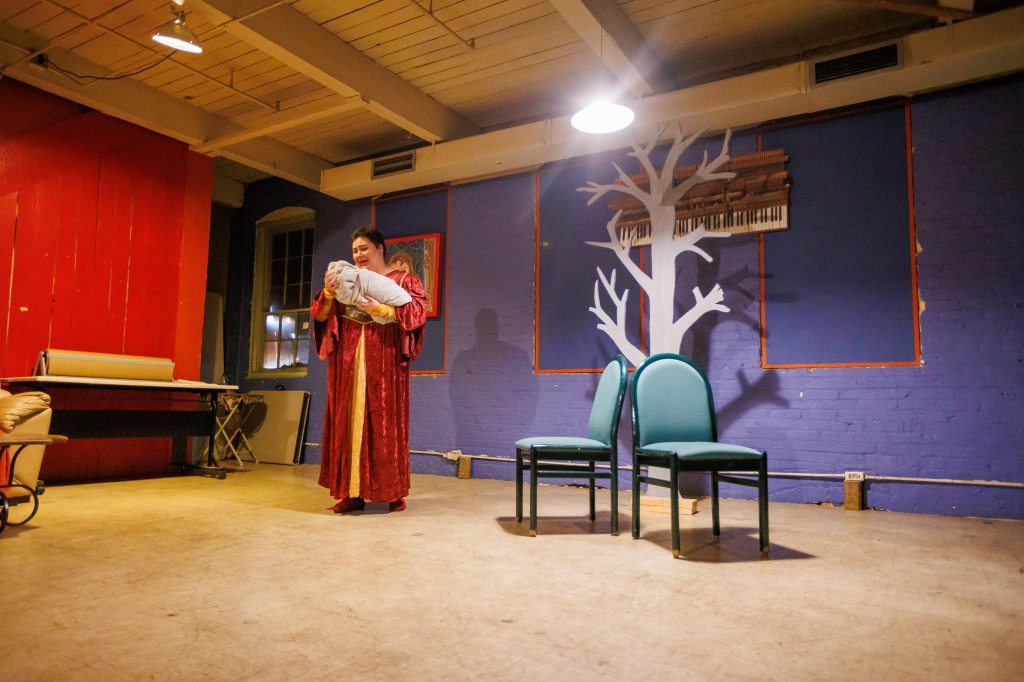
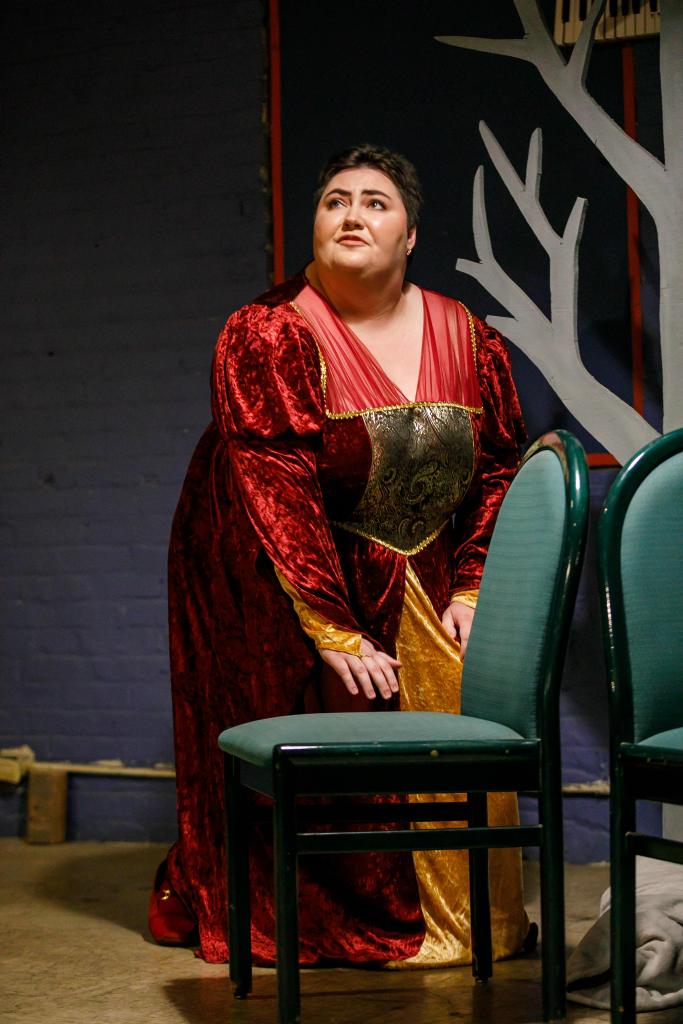

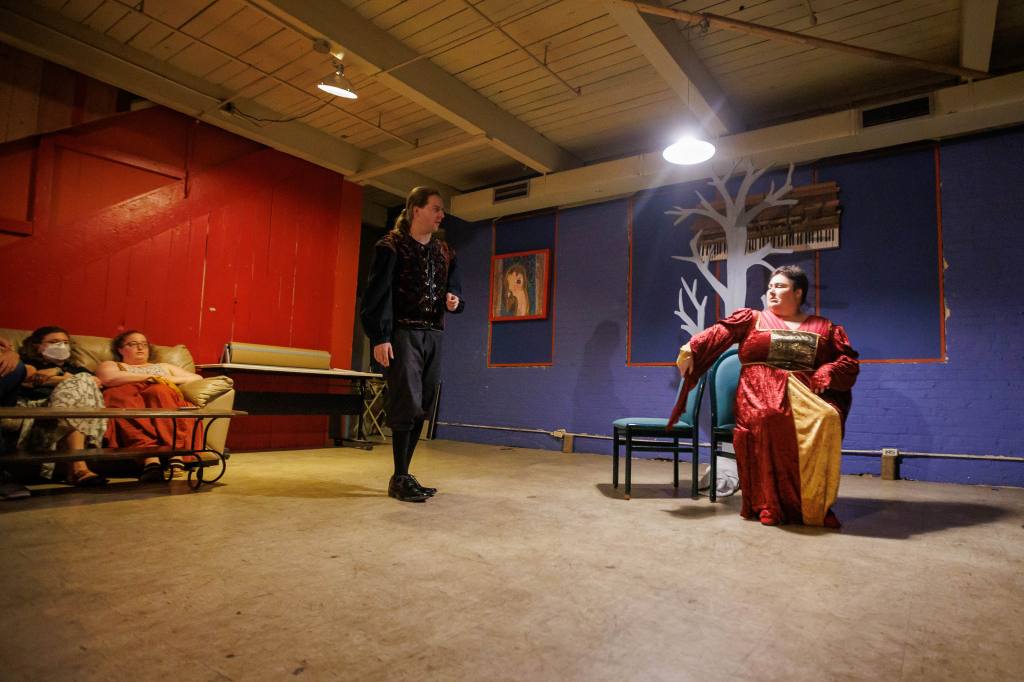


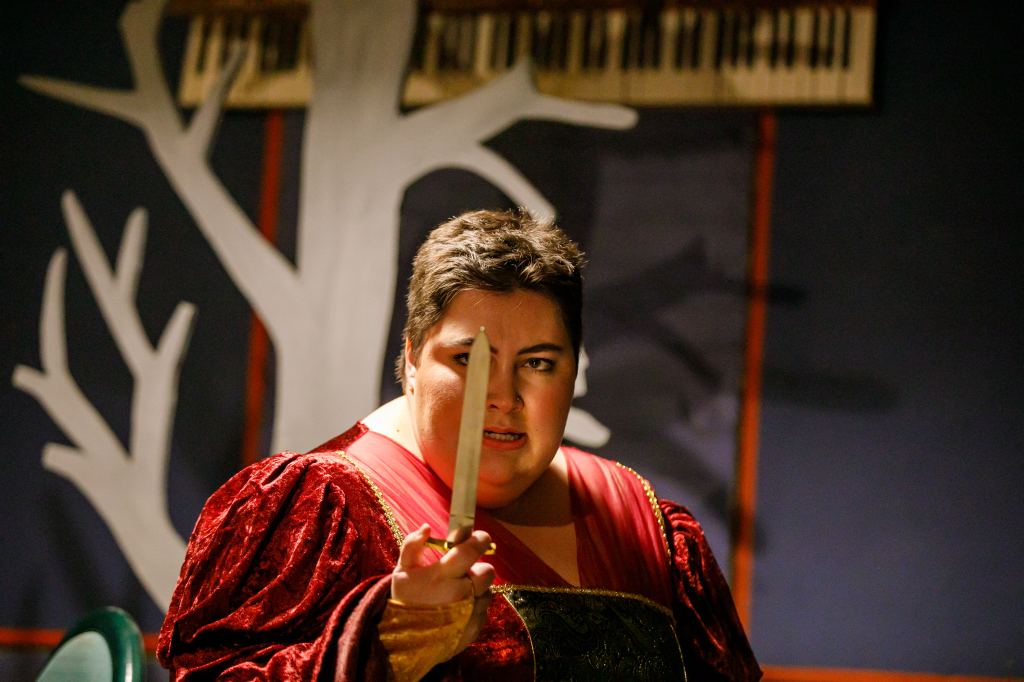
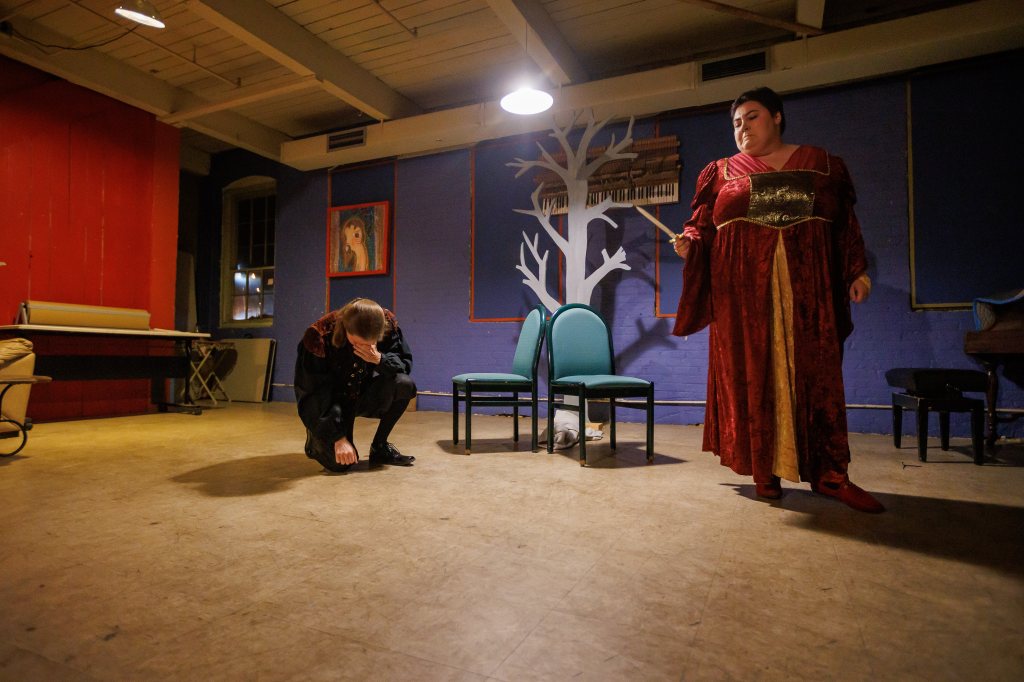
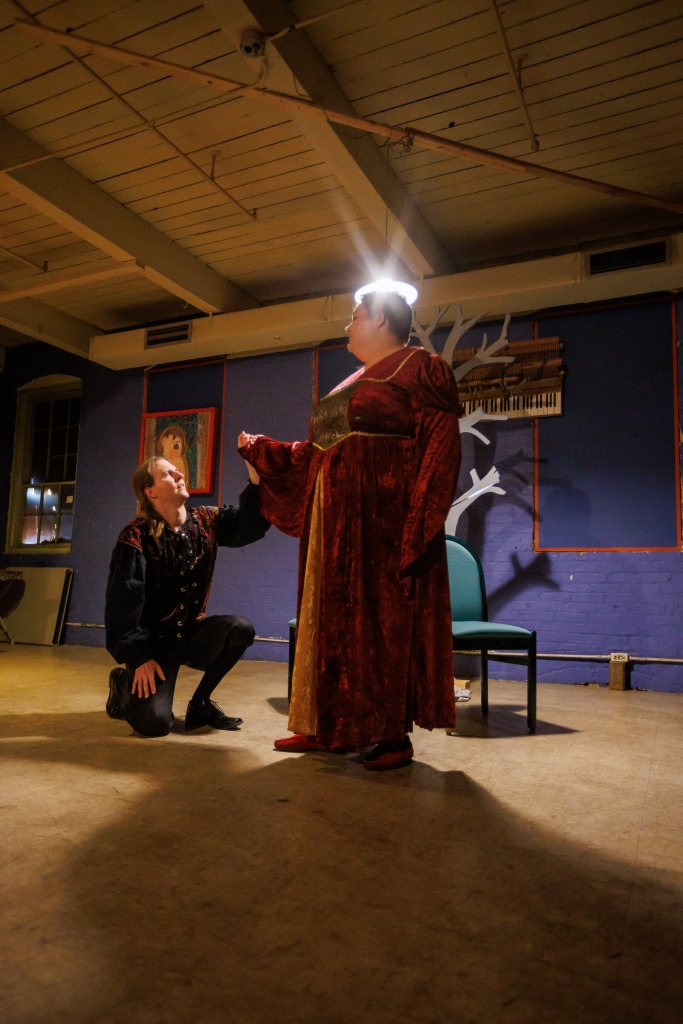

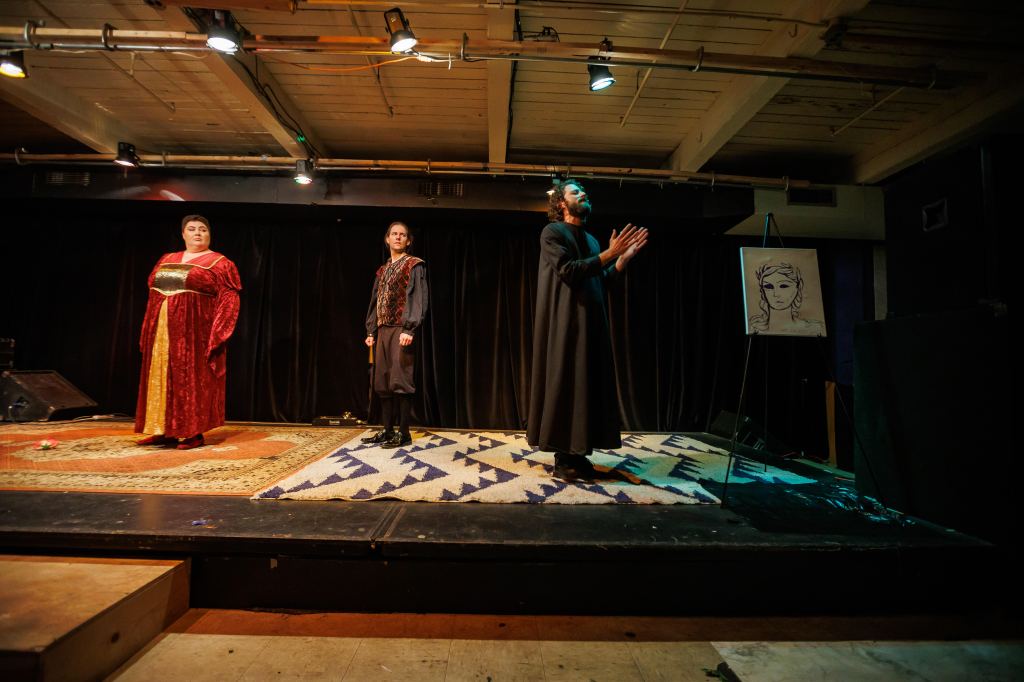

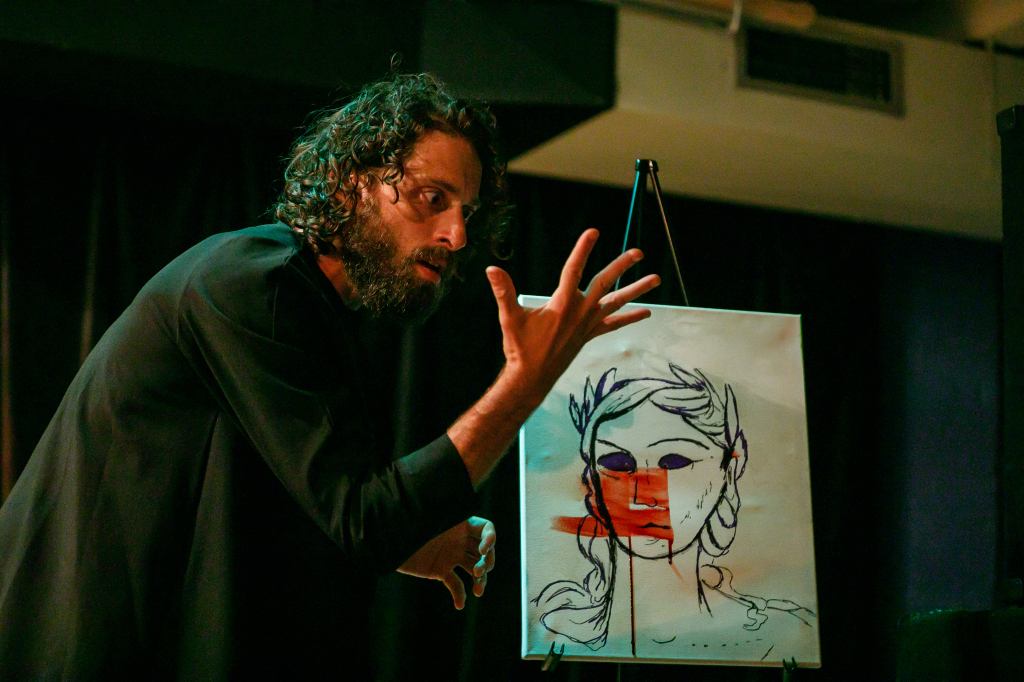

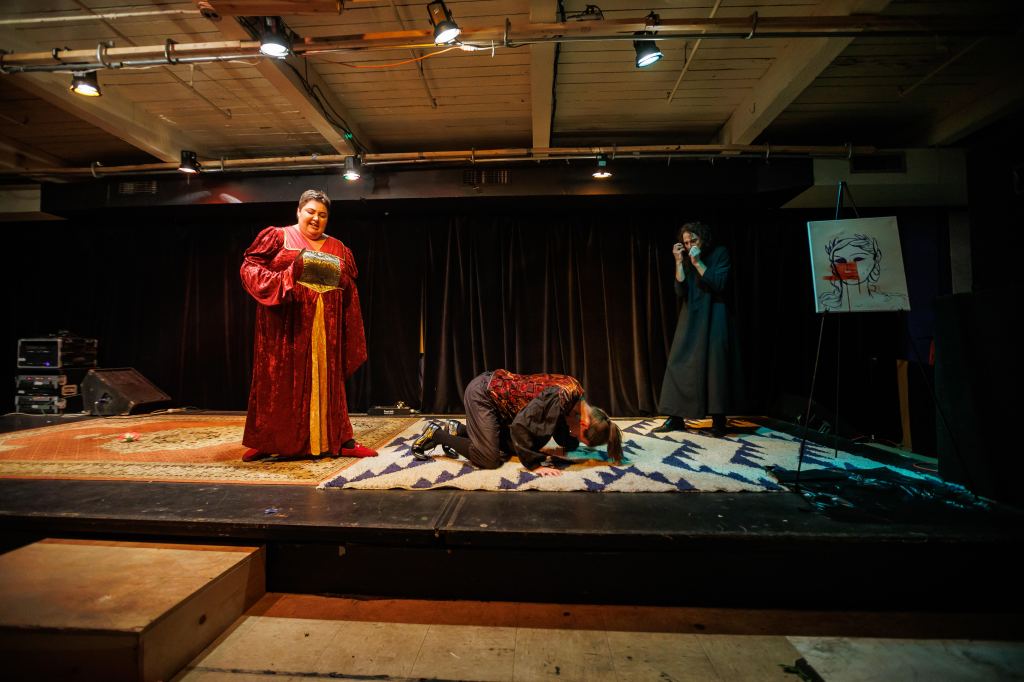

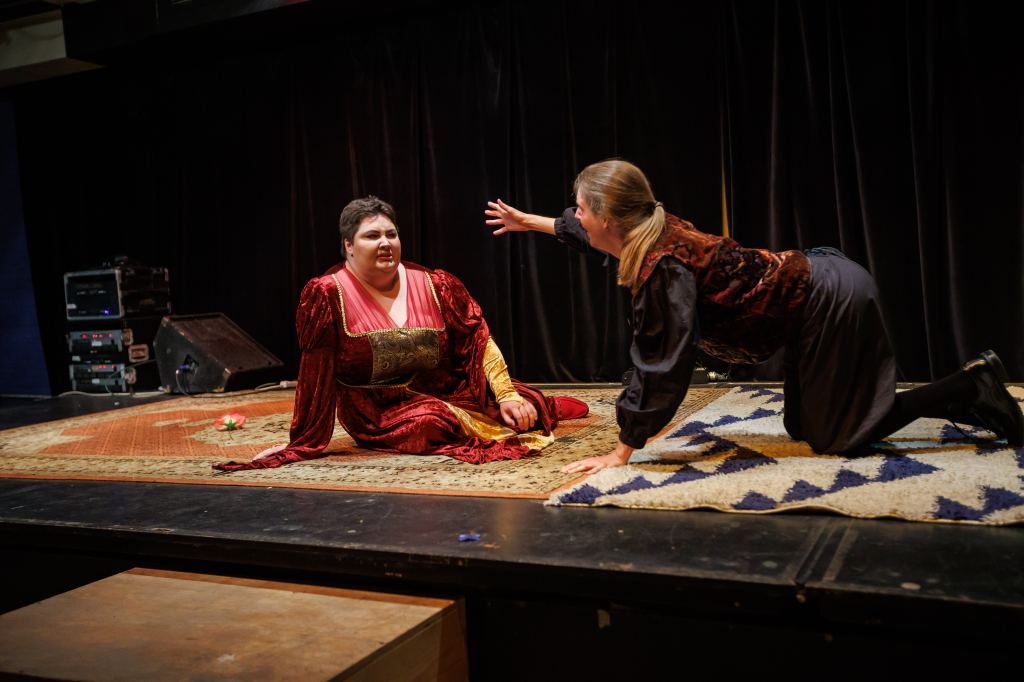
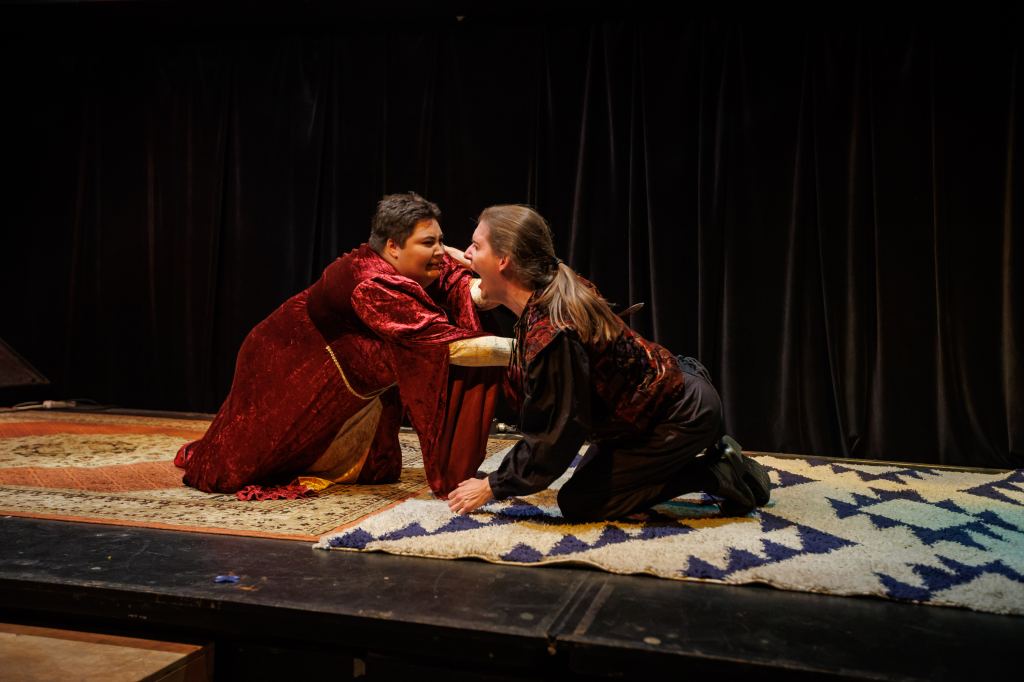

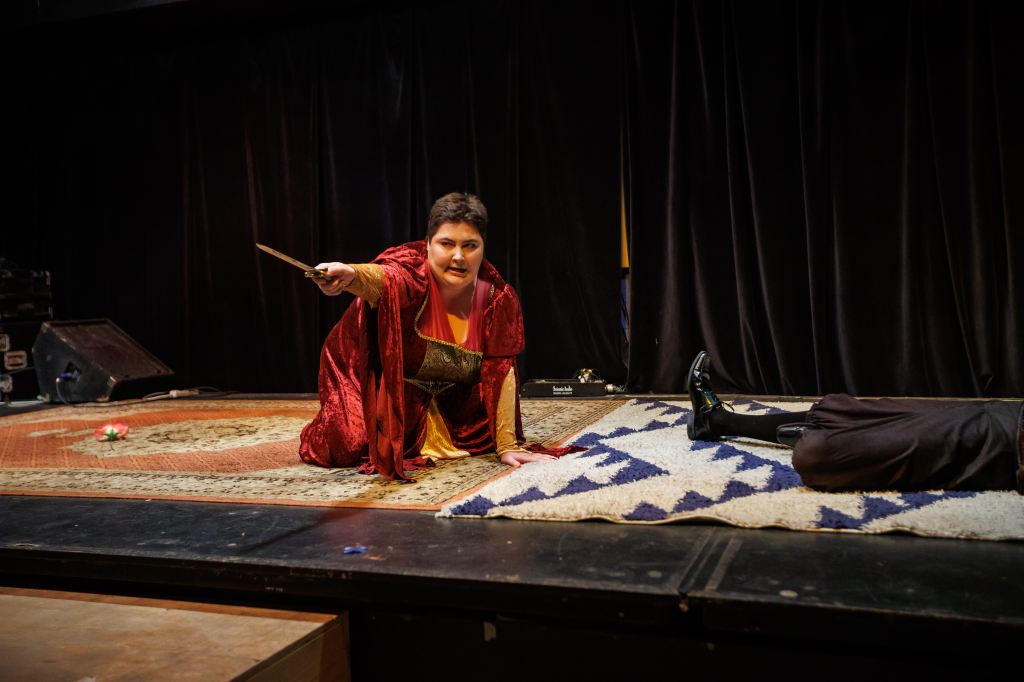
“Shakespeare After Hours,” 2024 Notre Dame Shakespeare Festival. Photos by Peter Ringenberg.
Shortly after the performance, Mark Pajor and Allison Pajor founded AMP Theatre Company, producing early modern plays for their local community in the Midwest United States. Learn more on their website: AMPtheatrecompany.org
———————————-
Credits for “The Queen of Corsica: Weep Not at My Wedding”
Directed by Mark Pajor
Achaea — Billie Bennett
Priest — Brian Nolan
Florimond — Mark Pajor (replacing the originally cast actor, who became ill the week of the performance)
Credits for the Notre Dame Shakespeare Festival’s 2024 “Shakespeare After Hours”
Coordinating Director: Christy Burgess
Production Manager: Allison Pajor
Performed at: LangLab, 1302 High St, South Bend, IN 46601, USA
 beyondshakespeare.org